Share Blog:

Driving in the wet: Rain safety tips for Hong Kong motorists

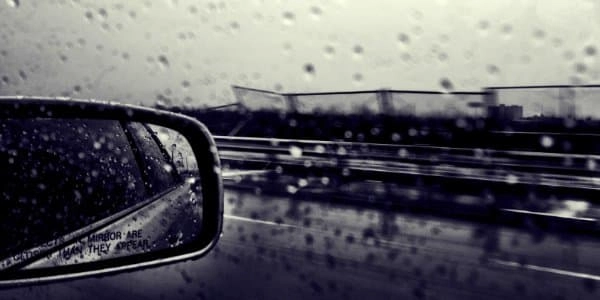
rain safety warning on car wing mirror
Author
Kwiksure Team
Created On
2017-06-28
Edited On
2026-07-20
Text Size

As we’re right in the thick of the rainy season now, it’s important for Hong Kong motorists to adjust to the conditions. Wet weather, typhoons and strong winds can all cause havoc on the roads and drivers need to take extra care to ensure they don’t cause accidents or injuries. This week, Kwiksure has some helpful rain safety tips to help you stay on the roads this wet season.

Table of contents
  • Check the tread on your tires
  • Drive slower and be extra vigilant
  • Check your following distance
  • Use your headlights responsibly
  • Driving through flooded areas
  • Will my insurance cover damage related to wet weather?

Check the tread on your tires

The Transport Department states that the minimum depth of tread allowable on your tires is 1 millimetre throughout at least three quarters of the breadth of the tread. Bald tires are dangerous to both you and other motorists around you. The grooves on a tire help channel water away so the tire can maintain contact with the ground and reduces the chance of hydroplaning (where water causes the car to lose traction).

Cars with no tread will find it more difficult to stop or brake and may, in some cases, cause a driver to lose control. For this reason, Kwiksure would recommend ensuring that you have sufficient tread around all of your tire and that you replace them immediately if they’re worn. If you find yourself hydroplaning, do not panic and brake suddenly. Calmly take your foot off of the accelerator and let the car slow down itself until you feel the grip come back to your tires.

經快而保買獨立交強險/商業險,出單快捷方便,符合內地需求!

Drive slower and be extra vigilant

Another reason for vehicles hydroplaning in the wet and losing traction is because they’re driving faster than the conditions will let them. Smart drivers will take rain safety measures seriously and slow their normal speeds down to reduce the risk of them driving hazardously. Driving slower makes it easier to react to other motorists should something go wrong, and gives you extra time to come safely to a stop when necessary.

While you’re driving slower, use the extra time you have to be more observant of the road conditions around you. Try to avoid driving through pools of water as the water thrown up can block the visibility of you and drivers around you, affect your brakes and, in extreme cases, stop your engine. If the rain is coupled with high winds, be on the lookout for fallen debris from trees or buildings on the road too.

經快而保買獨立交強險/商業險,出單快捷方便,符合內地需求!

Check your following distance

Another rain safety tip that’s universal around the world is to check your following distances. The Transport Department guidelines suggest that drivers should at least double their braking distances to ensure drivers have enough time to brake suddenly. In some countries, the “Two Second Rule” is used to gauge following distances when dry, so a “Four Second Rule” could be applied when doubling the distance in the wet.

The way the rule works is you count for two or four seconds, dependent on the conditions, once the car ahead of you passes a landmark (such as a tree, lamp post or intersection). If you pass the same landmark before you finish counting, then you are too close. The second rule should be used as a minimum for distances, meaning drivers should increase their following distance beyond four seconds if the conditions call for it.

經快而保買獨立交強險/商業險,出單快捷方便,符合內地需求!

Use your headlights responsibly

In rainy weather, the water spray from car tyres and rainfall splashes can cause distracting dazzling effects on other road users. For this reason, fog lamps can be a poor choice of lights to use in wet weather and should generally only be used when visibility drops below 100m. Your main headlights should also only be used during the day where they won’t cause distractions for other drivers, but will alert them to your presence on the road.

When in doubt, put yourself in the position of the drivers around. Consider what your car might look like to them, whether they can see, and whether they might be blinded by any of your lights

經快而保買獨立交強險/商業險,出單快捷方便,符合內地需求!

Driving through flooded areas

In general, floods should be avoided at all costs. Even if it seems like a pretty small amount of water, flash flooding can happen without warning and the safety of the passengers will be more important than the vehicle at that point. Drivers should always try an alternative route before attempting to drive through a flooded area, or see if they can park up and wait for the flood to subside.

When waiting or finding a detour is not possible, then you’ll want to follow these rain safety steps for driving safely through floods:

Examine the road for water depth and any potential obstacles: If the water is higher than your wheels or bonnet, it’s going to be far too high for you to drive through. You should also study the current of the water to see if there are any ripples being made that might indicate a hazardous obstacle lying beneath the water surface.

  • Aim to drive on the highest part of the road: The middle of the road is generally the highest and will give you the best chance of avoiding catastrophe. Avoid the sides of the roads where the camber is lowest; this is where the water will likely be deepest. Also try to keep one car or lane going through flooded waters at a time as oncoming vehicles can cause waves that can interfere with your route.
  • Keep a constant speed and don’t stop: Once you’ve broken through to the water, keep at a constant speed or accelerate if need be. Stopping can cause water to flow back into your radiator grille and through to your engine, or can be sucked up your exhaust pipe if you try to reverse - both likely causing expensive damage to your vehicle.
  • Pump/test your brakes when you exit the water: It’s important to test your brakes once you have left a body of water as leaving the brake pads wet until you need to slow down at high speed can lead to a loss of traction or an inability to stop safely.

 Again, Kwiksure would advise against driving through flooded areas. As well as putting your own safety at risk, you also risk causing significant damage to your vehicle that may not be covered by your insurance company.

比較全港逾60間保險公司報價,快而保汽車保險中介為你挑選最符合你要求的車保,立即報價!

Will my insurance cover damage related to wet weather?

Most insurance policies will cover damage related to rainy conditions, but the level of cover depends on whether you hold third party or comprehensive insurance. Third party insurance will only cover damage to other parties, while comprehensive plans will reimburse you for any damage caused to your vehicle. It’s worth knowing which type you have as ignoring rain safety increases the risks of accidents occurring.

In times of flooding, check what your policy says with regards to not just driving through flooded areas but about parking your vehicle during a flood. Some policies may not cover damage or loss to cars or motorbikes when they are parked on a public street during a flood, while others may not provide coverage for drivers intentionally driving through flooded waters. Knowing what you’re covered for can save you money in the long run.

If you’re looking for either third party or comprehensive car insurance in Hong Kong, the expert team at Kwiksure are always available to help. Their experience as drivers of Hong Kong roads means that you can be sure that their insurance solutions are made for drivers of the Special Administrative Region. For a free quote or advice on rain safety, contact the team at Kwiksure today!

比較全港逾60間保險公司報價,快而保汽車保險中介為你挑選最符合你要求的車保,立即報價!

Contact Kwiksure to get motor insurance quotes

Kwiksure has over 20 years of experience in the car insurance industry, comparing quotes from over 60 insurers in Hong Kong. Use our online quotation tool now to get a free car insurance quote!

The above information is for reference only. Kwiksure takes no responsibility for the accuracy and timeliness of the information. For the coverage, mode of compensation, benefit limit and premium levels of any specific insurance plan, please refer to the relevant policy terms.

kwiksure_team
Author
Kwiksure Team

Kwiksure is a licensed motor insurance brokerage company with over 20 years of experience in insurance. The company strives to simplify insurance and select the best insurance plans for customers that fit their budget and coverage needs.

Kwiksure provides a range of insurance products, including car insurance, motorcycle insurance, cross-border insurance between Hong Kong and Mainland China, home insurance, travel insurance, domestic helper insurance, and voluntary medical insurance. The team has been named "Best Car Insurance Broker" and "Outstanding Leadership Award" by various media outlets over the years.

KS Thumbnail_car-waxing
Car
2026-06-22

Complete Guide to Car Waxing: Costs, Types Analysis, and Recommendations

For car enthusiasts, it’s only natural to want their vehicle to maintain a glossy and polished appearance at all times. However, Hong Kong’s complex environment—such as exhaust fumes, high temperatures, and rain—can gradually cause the car’s surface to become dull without you even noticing. If not properly maintained and protected in time, this can lead to irreversible damage to the car’s paint. To protect the paintwork, car waxing is one of the most cost-effective solutions. However, there is a wide variety of car wax products on the market, with prices ranging from just over a hundred dollars for DIY options to several thousand dollars at professional auto detailing shops. So, how should you choose? What are the differences between traditional waxing and ceramic coating , which has become increasingly popular in recent years? This guide by Kwiksure will walk you through the benefits of car waxing, the different types available, price comparisons, and common questions—helping you choose the most suitable care solution for your vehicle.
【邊部PHEV插電混能好】2026香港PHEV車型盤點|優缺點分析|保養及使用注意事項
Car
2026-06-16

【Which PHEV Plug-in Hybrid is Good】2026 Hong Kong PHEV Model Guide|Pros & Cons Analysis|Maintenance & Usage Precautions

The most talked-about keyword in the local automotive scene in 2026, following the " End of the One-for-One Scheme " early this year, is undoubtedly "PHEV"—which stands for "Plug-in Hybrid Electric Vehicle." Since electric vehicle prices have skyrocketed, PHEV models, which can combat soaring fuel costs without causing range anxiety, have become the primary focus of aggressive promotion by major dealerships. This time, Kwiksure has compiled a list of the latest PHEV models available locally, along with key considerations for purchasing and daily use.
【混能車保養攻略】日系 vs 歐系混能車比較:原理、保養差異|維修成本分析
Car
2026-06-01

【Hybrid Car Maintenance Guide】Japanese vs. European Hybrids Comparison: Principles, Maintenance Differences|Repair Cost Analysis

The end of the "One-for-One" replacement scheme has caused electric vehicle prices to surge, weakening their appeal. However, in the face of persistently high fuel prices , many car brands have recently shifted their focus to heavily promoting hybrid vehicles instead. Whether you are preparing to purchase one or are already a hybrid owner, how do you distinguish between the different types of hybrid cars? How should you maintain a hybrid car? This time, Kwiksure shares with you the characteristics of Japanese and European hybrids, along with a comprehensive hybrid car maintenance guide.
網約車保險
Car
2026-05-26

Ride-Hailing Insurance

Ride-hailing services will be legalized on August 22, 2027. The government has recently submitted a document to the Legislative Council outlining regulatory details for ride-hailing services. These include requirements such as drivers must be at least 21 years old, hold a Hong Kong Permanent Identity Card, possess a driving license for more than one year, have no serious traffic convictions within the past five years, and pass designated assessments and pre-service training courses. It is proposed that, in the initial phase, the number of ride-hailing vehicle licenses be capped at 10,000. In addition, applicant vehicles must be less than 12 years old, must carry third-party liability insurance covering ride-hailing use, and private cars must be registered under an individual’s name (i.e., “fixed driver–vehicle pairing”). These proposals have sparked widespread discussions across various sectors of society. As a stakeholder in Hong Kong’s motor insurance industry, we explore, from different angles, issues affecting private car owners considering entering the ride-hailing industry, including insurance terms, coverage, and premiums.