

If you're traveling to a high-risk bear area, prepare bear bells, bear whistles, and bear spray. If you're planning a hike, bring brightly colored clothing to stand out. Avoid early morning and evening when bears are most active, and try to hike on crowded trails and travel with a companion.
[Japan Travel Tips] Bear Spotting Areas and High-Risk Areas in Japan | Essential Bear Prevention Tools, Bear Encounter Precautions, and Self-Rescue Methods

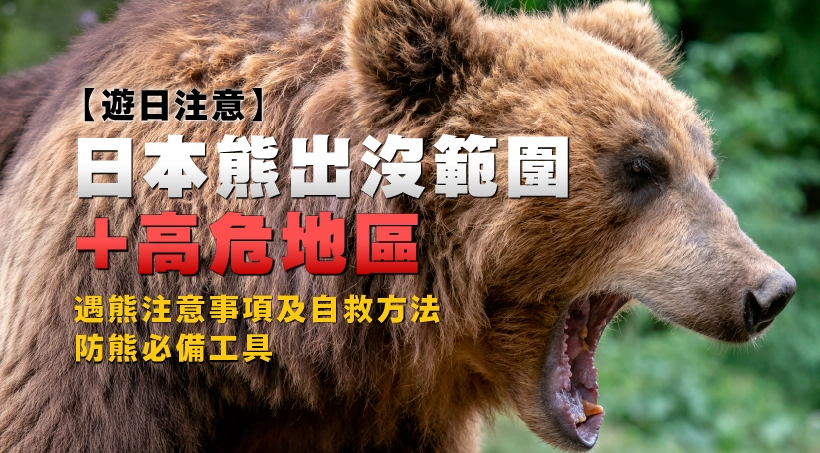
Japan has been plagued by bear infestations, with over 100 casualties reported so far in 2025. Bears have also been spotted in several popular tourist areas, with some even attacking tourists. Kwiksure had compiled a list of high-risk bear-infested areas and shared tips on what to do when encountering a bear and how to protect yourself, so you can be more alert and prepared when traveling.
- Bears in Japan | Bear Species and Seasons
- Bear-infested areas in Japan
- High-risk areas for bear sightings in Japan
- Bears in Japan | Self-rescue tips for bear encounters
- Bears in Japan | How to Avoid Bear Encounters
- Bears are spotted in Japan | Bear-proofing equipment at a glance
- Japan Bear Haunting | Emergency Helpline
- Frequently Asked Questions
- [Must-read for entering Japan] Details and precautions on how to use Japan's Joint Kiosk | Complete entry + customs declaration at one machine | Applicable to Haneda/Narita/Kansai Airports (with Visit Japan Web tutorial)
- [Leave Guide] 2026 Public Holidays | 11 Tips for Annual Leave Travel for Workers | New Year | Easter Holiday
- Japan Self-Drive Travel and Insurance Guide 2025
Bears in Japan | Bear Species and Seasons
According to the Japanese Ministry of the Environment, there are two main types of bears in Japan: brown bears (ヒグマ) and Japanese black bears (ツキノワグマ). Brown bears inhabiting Hokkaido are well-muscled, generally measuring about 2.2 meters in length and weighing 150 to 250 kilograms. Black bears inhabiting Honshu and Shikoku are generally 1.1 to 1.5 meters in length and weigh 80 to 120 kilograms. Brown bears are larger and more aggressive than black bears.
Bears generally hibernate from December to April. Autumn is the season when bears hunt in large quantities in preparation for hibernation, so they are more active. If the food they hunt in the mountains is not enough, they will have the opportunity to go down the mountain to find food.
Bear-infested areas in Japan

(Image from @L_yukisuki/X)
Recently, netizens integrated Japan's bear-prone areas in 2025, and found bear tracks almost all over the country. Only Kyushu and Okinawa have not reported any bear sightings, and the range of bear activity has expanded significantly, with the most frequent sightings in Tohoku and Hokkaido. Bear sightings have also spread from remote mountainous areas to city centers, residential areas, and popular tourist areas, such as Nara, Tokyo, and Sendai Station. A bear was reported to have attacked tourists in the famous Shirakawa-go Gassho Village. If you plan to travel to Japan, you must pay close attention to high-risk areas for bears across the country.
High-risk areas for bear sightings in Japan
1. Hokkaido — Shiretoko Peninsula, Sapporo
Large and aggressive brown bears are widely found in Hokkaido. Although they mainly live in forests, they can still be found on the outskirts of cities. Brown bears were found in many popular tourist spots, such as Furano and the Shiretoko Peninsula. Bear attacks not only occur in high-risk areas, among which Rausu-dake even had fatal bear attacks. Those who wish to go hiking in the suburbs or mountains must pay attention to safety. Sapporo has set a record high in bear-found reports. The West District also implemented a brown bear alert since a person was attacked by a brown bear.
2. Tohoku region of Japan – Sendai and Akita prefectures
Akita Prefecture has seen several bear attacks and casualties this year, with reports of bear sightings gradually moving closer to the city center and residential areas. There are also reporting 4 attacks in 3 hours. There are reports in Sendai that people have collided with a black bear while riding bicycles. Some people have also reported seeing black bears in the area near JR Sendai Station. Although there have been no reports of damage, as the reported locations are close to the station and residential areas, people still need to be vigilant when traveling.
3. Central Japan Mountains – Kamikochi, Tateyama Kurobe, and the western foothills of Mount Fuji
The mountainous areas of central Japan are the main distribution area for black bears. Many famous tourist attractions have also issued bear sighting alerts. The Mikuri Pond near Tateyama Kurobe Murodo was even photographed with bears swimming in the pool. Bears have also been spotted in nearby mountains, and Tateyama City has issued a bear alert. Bears have also been sighted in other areas, such as Kamikochi and along the mountaineering and sightseeing routes at the western foot of Mount Fuji, so please exercise caution when traveling.
4. Kansai Region, Japan - Kumano Kodo
The Kumano Kodo, a World Heritage site in Tanabe City in the Kansai region, is a pilgrimage route that requires visitors to hike through dense forests inhabited by species such as bears and wild boars. This route is also a hotspot for black bears, so bear protection equipment is recommended before embarking on the journey.
Bears in Japan | Self-rescue tips for bear encounters
1. More than 20 meters away from a bear
- Leave slowly and quietly
- If a bear notices you, back away slowly while looking at the bear, avoiding looking into its eyes.
- Never turn around and run so the bear can see your back
- Avoid getting close to the cubs to avoid angering the mother bear.
2. Within 20 meters of a bear
- Back away slowly; do not run or let the bear see your back.
- Pulling your clothes open to make yourself look bigger
- Use trees or large rocks as cover and place obstacles such as stones or branches in between
- Get your bear spray ready for emergencies
3. Within 5 meters of a bear
- Stay calm, do not play dead or scream, use a low and steady voice
- Lie on the ground, curl up, and protect the back of your neck with your hands. You can use a backpack to protect your head to avoid being attacked by a bear.
- Use bear spray (always check the wind direction when using)
Bears in Japan | How to Avoid Bear Encounters
1. Make noise
Bears typically attack only when frightened and will not actively attack humans. Therefore, when in forests or bear-infested areas, you can use loudspeakers, radios, clapping, or chatting to alert bears to your presence and encourage them to avoid you.
2. Handle food properly
Since bears mainly hunt for food, tourists should avoid bringing food with strong odors to bear-infested areas, properly dispose of food scraps, and never feed wild animals to prevent bears from approaching due to the smell of food.
3. Travel with companions and plan your itinerary
In bear-infested areas, choose trails with more tourists and travel in groups whenever possible. Stay on track to reduce the risk of encountering a bear. Avoid traveling in the early morning and evening, when bears are most active, and avoid outdoor activities at night when visibility is limited.
4. Pay attention to reports and learn about high-risk bear areas
Before departure, first check the local official website, news, or Boonie Bears Map to get information on recent bear sightings through various channels, such as Facebook and Twitter, and pay attention to "Bear Alert" signs along the way to avoid areas where bears are active.
Bears are spotted in Japan | Bear-proofing equipment at a glance
1. Bear Bell
Bear bells can be hung on a backpack or belt. They will continue to make sounds while walking, letting bears know of the presence of humans and reducing the chance of being approached or attacked by bears.
2. Bear Whistle
The whistle emits a high-frequency, sharp sound that travels over a long distance, which can help drive away bears and send out distress signals in emergency situations.
3. Electronic bear speaker
Speakers designed for bear protection can emit powerful, high-decibel sounds to help scare nearby bears and reduce the risk of bear attacks. Some speakers are also equipped with flashlight functions and can be used when hiking.
4. Bear spray
A close-range defense tool that can prevent a bear from approaching or attacking. Read the instructions carefully before use and keep it within easy reach for immediate emergency use.
5. Radio/Music Player
Similar to a bear bell, it continuously emits sounds and conversational voices to let bears know that humans are nearby.
6. Brightly colored clothing
Bright-colored clothing helps you stand out in the woods. Not only can it allow bears to spot you from a distance, but it also makes it easier for others to spot you.
Japan Bear Haunting | Emergency Helpline
- Japan Police Bureau Hotline: 110 (Japanese); 03-3501-0110 (English)
- Fire/Ambulance Emergency Hotline: 119
- 24-hour Chinese-language emergency hotline for visitors to Japan
- Within Japan: 050-3816-2787
- International calls: +81-50-3816-2787
- Hong Kong Residents Unit of the Hong Kong Immigration Department 24-hour hotline: 1868 (you can call, WhatsApp, or WeChat)
- China's Ministry of Foreign Affairs Global Consular Protection and Service Emergency 24-hour Hotline: +86-10-12308, +86-10-65612308
Frequently Asked Questions
Where are the high-risk areas for bears in Japan?
Brown bears are primarily found in Hokkaido, Japan, particularly in the Shiretoko area and Sapporo. Black bears are found in the Tohoku region, the central mountainous areas such as Kamikochi and Tateyama Kurobe, and the Kumano Kodo Trail in the Kansai region. Urban fringes are also considered high-risk areas. Kyushu and Okinawa are the only two regions in Japan where no bear sightings have been reported.