Share Blog:
Copy Link

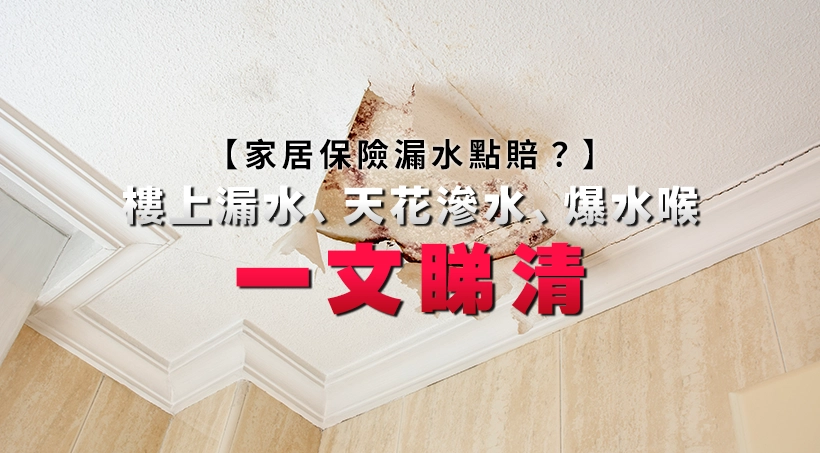
How does home insurance cover water leakage? A complete guide to upstairs leaks, ceiling seepage, and burst pipes

Author
Eric Lau
Created On
2026-05-16
Edited On
2026-05-21
Text Size

What is the coverage scope for home insurance regarding water leakage? How do claims work? From upstairs leaks, ceiling seepage, burst water pipes, and flooding, to damages caused by typhoons and extreme weather. This time, Kwiksure provides a detailed explanation of the claim process for home insurance water leaks, common reasons for claim rejections, and the differences between fire insurance and home insurance. It also includes a coverage comparison and practical handling tips to help you clearly identify responsibilities and coverage scopes.

Table of contents
  • Common Water Leakage Scenarios: Does Home Insurance Cover Them?
  • How to Handle and Claim Home Insurance for Water Leakage? Actual Scope of Compensation
  • Common Reasons for Claim Rejection: Chronic Seepage, Lack of Maintenance, and Structural Issues
  • Key Takeaways of Home Insurance Water Leakage Clauses: What to Look Out for in Water Damage Coverage?
  • Home insurance coverage comparison
  • Frequently Asked Questions
Related Articles
快而保家居保險計劃提供高達 150 萬家居財物及個人物件保障,更設「全球性全險」保障你在世界任何地方遺失或損毀的貴重物品,立即報價!

Common Water Leakage Scenarios: Does Home Insurance Cover Them?

Scenario 1: Leakage from Upstairs to Other Units

When a leak from upstairs causes damage to your home, home insurance primarily provides support in the form of "compensate first, claim back later." You can first file a claim with your own insurance company to receive compensation for damaged interior decorations, flooring, and furniture, resolving your immediate financial needs. If the water leak renders the unit temporarily uninhabitable, some policies will even subsidize temporary accommodation expenses.

Most importantly, after paying out the compensation, the insurance company will exercise its "right of subrogation." They will appoint a loss adjustment firm to gather evidence and represent you in recovering the losses from your neighbor. This saves you from having to handle legal procedures yourself or argue with your neighbor, as the insurance company steps in on your behalf. Just remember to take photos and document the damage immediately, and retain the damaged property before the loss adjusters inspect it.

Scenario 2: Ceiling Seepage and External Wall Seepage—Is Fire Insurance or Home Insurance Responsible?

Ceiling seepage is usually prioritized by home insurance because it mostly results in peeling paint or damaged furniture. Home insurance will first compensate you for your interior decorations and property losses, and subsequently recover the costs from the responsible party upstairs on your behalf. Fire insurance generally does not handle non-structural seepage caused by neighbors, unless the leak causes damage to the building structure itself (such as structural beams or steel bars).

Handling external wall seepage is more complex. If the seepage is caused by damage to the building’s external wall structure (such as cracks), this falls under the scope of fire insurance or the building's public liability insurance, as the external wall is part of the building structure. However, if the seepage damages your indoor belongings, you can claim for property loss through your home insurance. That said, the insurance company might refuse compensation if the external wall is deemed to be suffering from "wear and tear/lack of maintenance" rather than an accident.

Scenario 3: Home Water Pipe Leakage / Burst Pipes / Flooding

When a burst pipe damages your home's flooring, furniture, or electrical appliances, home insurance will provide compensation. If the flooding affects the elevator lobby or downstairs neighbors, the "Third-Party Liability Insurance" within your policy will cover the legal compensation on your behalf. However, please note that insurance usually only covers property losses caused by "accidents," whereas the repair costs for the water pipes themselves (labor and parts) are mostly excluded from home insurance coverage.

Scenario 4: Home Insurance Coverage Under Typhoons and Extreme Weather

When strong winds break windows or torrential rain causes seepage, which subsequently damages your furniture, appliances, or wooden flooring, home insurance will provide compensation. Furthermore, if a typhoon causes glass to shatter and fall, injuring pedestrians or damaging others' property, the "Third-Party Liability Insurance" within the policy will handle the legal compensation for you. If extreme weather renders the unit temporarily uninhabitable, many home insurance policies will also subsidize temporary accommodation expenses. When filing a claim, be sure to take photos and document the damage immediately, and keep the damaged items until the loss adjustment firm completes its inspection. For more details regarding home insurance coverage during typhoons, you can refer to [Typhoon and Black Rainstorm] Home Seepage and Broken Windows During Storms: Does Home Insurance Cover It?

How to Handle and Claim Home Insurance for Water Leakage? Actual Scope of Compensation

Retain Evidence

Before cleaning up, take close-up photos from various angles of the leakage source, the flooding situation, and all damaged property. This will provide the most critical evidence for the subsequent assessment by the loss adjustment firm.

Notify Relevant Parties

Contact the property management office to make an official record. If an upstairs unit is involved, request that the management office send staff to inspect and locate the source. At the same time, notify your insurance agent as soon as possible to file a record, and follow the insurance company's instructions to handle subsequent matters.

Loss Adjuster Assessment

Insurance companies usually appoint a loss adjustment firm to conduct an on-site investigation to determine the cause of the leak, verify the list of damaged items, and assess repair costs. Remember, absolutely do not throw away any damaged property (such as water-logged appliances) before the loss adjusters inspect them, otherwise, it will affect your claim.

Submit Claim Form

Submit the official claim form, loss adjustment report, repair quotes, photos, and other relevant documents. At the same time, you should prepare purchase receipts or quotes for the damaged items for the insurance company's reference.

Actual scope of compensation

Interior decoration

This includes wall paint, wallpaper, wood flooring, and ceiling panels affected by water damage.

Property damage

Furniture, appliances (such as televisions and stereos), clothing, and valuables that are affected.

Third-party liability

If your unit leaks water, causing damage to your neighbor's property or malfunctioning the building's elevator, your insurance will cover the related legal liabilities.

Additional expenses

If a unit becomes uninhabitable due to severe flooding, compensation may include reasonable temporary hotel accommodation expenses.

Common Reasons for Claim Rejection: Chronic Seepage, Lack of Maintenance, and Structural Issues

Chronic seepage is considered cumulative damage rather than a sudden accident. If an owner delays handling the issue, causing the extent of the damage to increase, the loss adjustment firm may reject the claim as a result. Secondly, a lack of maintenance and natural wear and tear—such as aging waterproofing layers, worn-out rubber seals, or rusted water pipes—fall under the owner's daily maintenance responsibilities. This even includes rain seepage during typhoons caused by aging window frames rather than shattered glass, which the insurance company also has the right to refuse compensation for.


Furthermore, leaks involving building structural issues, such as cracks in the building's external walls or design defects, are regarded as "building shell" quality problems rather than accidents. These fall under the claim scope of fire insurance or the building's public insurance, rather than home insurance. In summary, home insurance only covers unforeseeable risks. If the damage stems from a lack of maintenance over time or structural defects, owners must bear the responsibility for repairs themselves.

Key Takeaways of Home Insurance Water Leakage Clauses: What to Look Out for in Water Damage Coverage?

"Sudden Accident" vs. "Chronic Seepage"

In home insurance clauses regarding water leakage, a frequent point of contention lies in how to distinguish between a "sudden accident" and "chronic seepage," as both have a decisive impact on the outcome of the claim.

A "sudden accident" refers to an event that occurs within a short period of time, is unforeseeable, and happens abruptly, such as a water pipe suddenly bursting or a washing machine hose suddenly disconnecting. Generally speaking, the insurance company will compensate for the flooring, furniture, and wall decorations affected by the accident. The key is that the damage is a "one-off" and "instantaneous" event, which fits the definition of accident insurance.

"Chronic seepage," on the other hand, refers to slow, continuous, and foreseeable damage, such as walls seeping water over a long period leading to mold growth, or the aging of a bathroom's waterproofing layer causing ceiling drips. Insurance companies usually classify this as "natural wear and tear" or a maintenance issue. A common misconception among owners is that "as long as there is a water leak, it's covered." However, if the loss adjustment firm finds extensive mold on the walls or that the wooden flooring has turned black over a long period, they will judge that the owner failed to fulfill their maintenance responsibilities or delayed handling the issue, resulting in a claim rejection.

Deductible

When purchasing home insurance, the premium is naturally one of the important considerations. But have you ever thought that behind a cheap premium, you might actually need to bear a higher deductible?

A deductible, commonly known in Hong Kong as "excess" (墊底費), is simply the amount that the owner must bear on their own when an accident occurs and a claim is filed; the insurance company pays the remaining balance. To reduce the risk of payouts, insurance companies generally set a deductible, which eliminates small-value claims and reduces administrative expenses. Therefore, it is important to note that home insurance plans on the market advertising low premiums may come with a higher deductible.

Broken Glass Coverage, Valuable Items, and Electrical Appliance Limits

Home insurance covers the labor and material costs for the accidental shattering of windows, but excludes natural cracks. Property compensation has a "single article limit." If valuable items or high-end electrical appliances are not declared in advance, you can only receive a fixed-amount compensation, and depreciation will be deducted, which may not fully cover the original price.

In the event of flooding, only one deductible is deducted for the same accident, but the water-damaged flooring or furniture will depreciate over the years. Please note that indirect losses, such as data loss, are not covered. It is recommended to keep receipts for high-value property and specify them for insurance coverage to ensure adequate compensation limits.

Home insurance coverage comparison

Comparison of Water Damage Coverage for Home Insurance (HKD)

Insurance Company

Project Name

Total coverage of home and property

Maximum compensation for each group of household items

Legal liability

Self-paid amount

Zurich

Basic Plan

$600,000

$100,000 (per set)

$5 million

$1,000 (per time)

Comprehensive Plan

$750,000

$100,000 (per set)

$10 million

$1,000 (per time)

Blue Cross

Plan A

$1.2 million

$100,000 (per set)

$10 million

$1,000 or 10% of the compensation amount (whichever is higher)

Plan B

$750,000

$90,000 (per set)

$9 million

$1,000 or 10% of the compensation amount (whichever is higher)

Plan C

$500,000

$75,000 (per set)

$8 million

$1,000 or 10% of the compensation amount (whichever is higher)

Brief Summary of Sum Insured Key Points

When purchasing home insurance, you must pay attention to the gap between the maximum sum insured and the actual value of your property. Although the maximum limits for "Personal Liability" and "Total Property" under various plans can reach millions or tens of millions of Hong Kong dollars—which seems quite sufficient—the devil is in the details regarding the sub-limits for compensation. For instance, the maximum payout per "article/set of property" is generally only HK$75,000 to HK$100,000, and the sub-limits for "Personal Effects/Valuables" are typically even lower. Therefore, if you have high-end electrical appliances, luxury watches, or jewelry at home, remember to understand the sub-limits of each category before insuring, otherwise, you will not be able to obtain full compensation in the event of water damage or an accident.

Get a Home Insurance Quote Instantly

Frequently Asked Questions

What if there is a leak from upstairs but the neighbor refuses to cooperate?

If you encounter an uncooperative upstairs neighbor, you should first take photos and contact the property management office to document the issue as third-party evidence. At the same time, file a report with your home insurance provider so a loss adjustment firm can assess the damage. Your insurance company will first compensate you for your interior decorations and property losses, and will subsequently exercise its "right of subrogation" to pursue legal recovery from the neighbor on your behalf. Additionally, you can seek intervention from the Joint Office for Investigation of Water Seepage Complaints (Seepage Office), as they have the authority to enter the upstairs unit forcefully to conduct testing. If the source is confirmed, you can use the government report to claim damages at the Small Claims Tribunal, compelling the other party to take responsibility.


If a leak in my home affects downstairs, who is responsible? How is compensation handled?

You will need to bear the responsibility for the damage to the downstairs neighbor's ceiling, interior decorations, and property. If you have purchased home insurance, you should immediately notify the property management office and take photos to document the damage. However, you must absolutely not admit liability or promise any compensation amount on your own. You should hand it over to your insurance company, which will appoint a loss adjustment firm via the "Third-Party Liability Insurance" in your policy to handle negotiations and compensation with the downstairs neighbor on your behalf.

If I only buy either fire insurance or home insurance, is it enough to protect against water damage?

No, it is not enough! Fire insurance only covers the building structure, such as walls and external walls, whereas home insurance only covers indoor interior decorations and household property. If you only buy fire insurance, you will not receive compensation if a burst pipe floods and damages your furniture and flooring. Conversely, if you only buy home insurance, water seepage caused by cracks in external walls or structural damage will not be covered.

What can I do if the source of the water leak is not inside my apartment?

If the source of the leak is from an external wall or common piping, the responsibility lies with the property management office or the Owners' Corporation, and the repairs should be covered by the building’s public insurance or fire insurance. If the source is in an adjacent or upstairs unit, the owner of that unit must bear the responsibility. You can first claim compensation for your indoor interior decorations through your personal home insurance, and let the insurance company handle the recovery from the responsible party on your behalf. You can also contact the property management office and the Seepage Office to intervene and investigate.

Contact Kwiksure to get home insurance quotes

Kwiksure has over 20 years of experience in the home insurance industry, comparing quotes from over 60 insurers in Hong Kong. Use our online quotation tool now to get a free home insurance quote!

The above information is for reference only. Kwiksure takes no responsibility for the accuracy and timeliness of the information. For the coverage, mode of compensation, benefit limit and premium levels of any specific insurance plan, please refer to the relevant policy terms.

Eric Lau
Author
Eric Lau

Eric is a content creator for Kwiksure, responsible for writing articles on various topics such as cars, travel, domestic helpers, etc., striving to provide readers with detailed and practical information.

With over 20 years of experience in the media industry and driving, Eric has worked for several newspapers, magazines, and online media outlets. Apart from his passion for writing, he also enjoys the pleasure that driving brings. On average, he drives over 40,000 kilometers per year.

【業主必睇】家居保險保額點訂?
Home
2022-09-26

[Homeowners must read] How to order home insurance coverage?

Assessing the amount of insurance you need for your structure and personal effects can be a real headache. The situation is the same whether you are a local resident or a foreigner planning to purchase property. But no matter who you are, it is necessary to purchase appropriate home insurance in Hong Kong. First, there are a few things you must consider and understand before asking around for quotes. As an expert in property and casualty insurance , Pacific Prime will now introduce to you the information that home owners should know, including what home insurance is and the factors that determine the price of home insurance in Hong Kong.
fire-home-insurance-additional-living-expense
Home
2025-06-27

Home and fire insurance & additional living expense cover

Have you ever heard stories of people suddenly becoming homeless after a disaster that struck their home? It might have happened due to fire or a hurricane or other perils that damaged the apartment and made it uninhabitable and left entire families on the streets. For all those who own or rent a house, and of course, have a home and fire insurance plan in place, making sure that their policy also includes additional living expenses cover, also called the loss of use coverage, is useful in a situation where your place is uninhabitable. Additional living expense covers not only the cost of your new temporary accommodation like a hotel but also any additional living expenses such as for food, clothes etc, while your house is being fixed. The idea of additional living expense cover is to maintain the standard of living you had before the damage of your property.
屋企裝修工程受唔受保?裝修要買咩保險?家居保險涵蓋範圍|家居裝修保障
Home
2024-12-09

Does home insurance cover renovation costs?

Whether you’re buying a property or renting one, creating a cozy and comfortable home often involves hiring contractors for renovation or refurbishment. But does your existing home insurance cover renovation work? What kind of insurance should be purchased for renovations? And if an accident happens, should the homeowner or the renovation company be held responsible? This time, FastInsure provides answers to these important questions.
殺滅床蝨 l 10招徹底處理家居床蝨|拆解床蝨成因及跡象|蝨咬處理方法|旅行、家居預防要訣 l 附家居保險包唔包床蝨
Home
2024-11-25

[Bed bugs attack Hong Kong] 10 tips to completely deal with bed bugs at home | Dissecting the causes and signs of bed bugs | How to deal with lice bites | Travel and home prevention tips

Bed bugs have recently broken out in many countries. Traces of bed bugs were found on the seats of the Hong Kong Airport Express train earlier, which made Hong Kong people shudder at the mention of bed bugs. Bed bugs have an amazing reproductive capacity and can lay up to 200 to 500 eggs. Bed bugs can easily spread throughout the house in a few weeks. In addition, it is difficult for ordinary people to completely eliminate them by themselves, so the consequences can be serious or minor. This time, Kwiksure shares 10 ways to deal with bed bugs at home, analyzes the causes and signs of bed bugs, and how to prevent bed bugs from invading your home when traveling.
家居防火小貼士
Home
2020-02-20

Fire prevention tips for your apartment

Winter is full-on in HK, with temperatures reaching below 10 degrees at night, making living in the non-isolated and non-centrally heated Hong Kong apartments a challenge. While we at Kwiksure know that heating your space is a must during winter months, the right safety precautions have to be in place to avoid a potentially life-threatening catastrophe. Below, we outline some of the main causes of apartment fires and ways you can prevent setting your apartment ablaze.
簡介香港家居保險
Home
2022-05-10

Home Insurance in Hong Kong: A guide

Homes are notoriously expensive in Hong Kong. In fact, the SAR was named the world’s most expensive housing market in 2020 . With a significant investment needed to obtain some personal space for yourself in the city, it should come as no surprise that some people will want to do what they can to protect that investment. And this is not only true for the home itself, but also the personal possessions inside it. This is where the various types of insurance out there that can provide protection for your personal property come in. In this Kwiksure article, we take an in-depth look at home insurance, its features, and other things you should know.